News
Engineering confidence: Why validation of Pwind methodology matters

Alberto Llopis
Published
07 May 2026
Innovations need trust to take off. And you can’t build trust on promises, you need proof. That’s why bound4blue has invested in rigorous third party validation of its Pwind methodology, the ‘wind propulsion system force matrix’ methodology for calculating Pwind, with official recognition from both DNV and Lloyd’s Register.
So, what does this entail and how will it help you adopt clean, accessible and commercially attractive wind power with confidence?
Third party validation of our pioneering eSAIL® system marks more than just a badge of compliance. It is a meaningful step forward in aligning wind-assisted propulsion technology with IMO’s guidelines, particularly those set out in MEPC.1/Circ.896 (2021), outlining how innovative energy efficiency technologies should be assessed for EEXI and EEDI improvements.
Why tool validation matters for WAPS performance prediction
In essence, this validation is about building trust – not just with clients and shipowners, but also with class societies, flag administrations, and the broader regulatory ecosystem. As wind propulsion systems gain traction, it becomes critical to ensure that performance estimations are transparent, replicable, and aligned with IMO expectations.
That’s why we’ve followed the specific methodology recommended in Section 2.4 of MEPC.1/Circ.896, which focuses on the proper calculation of the force matrix – the backbone of any reliable performance estimation for Wind-Assisted Propulsion Systems (WAPS).
What does the IMO guideline propose:
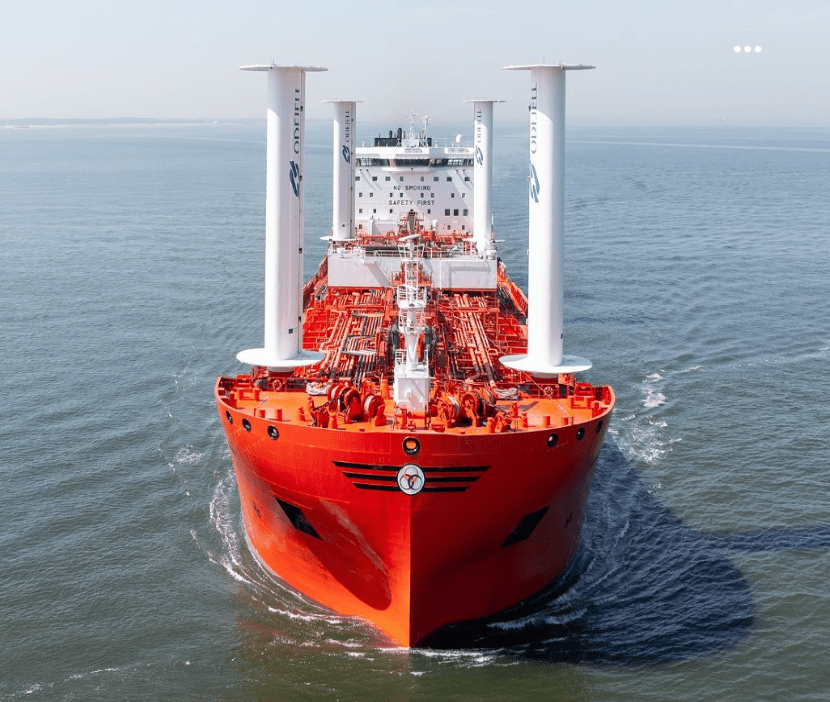
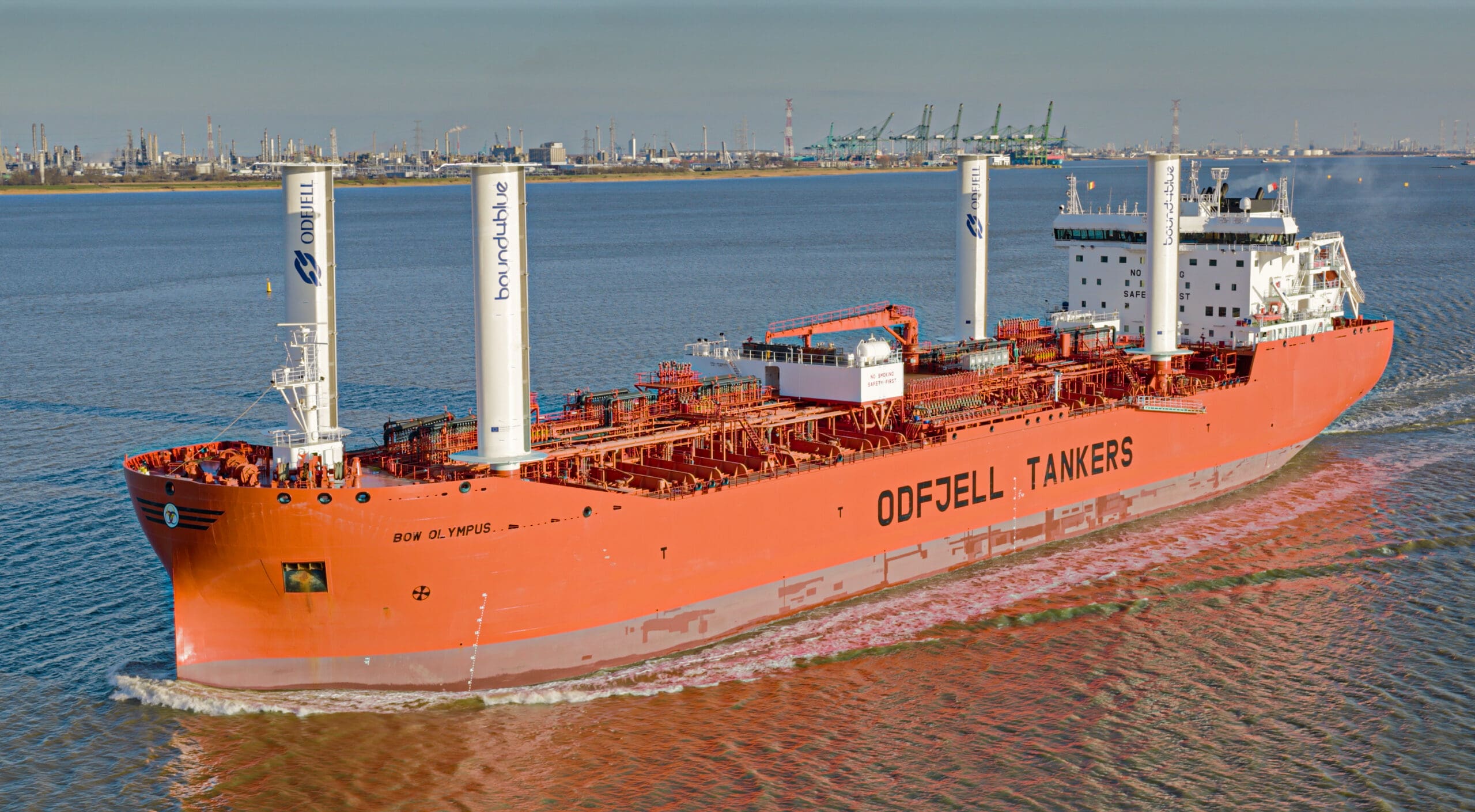
The aerodynamic forces generated by any Wind-Assisted Propulsion System (WAPS) are subject to aerodynamic interference, particularly sail-to-sail and sail-to-ship interactions. In simple terms, four sails do not deliver four times the force of one. These interference effects are critical in accurately calculating a ship’s global force matrix, which is the basis for evaluating EEDI/EEXI performance improvements.
The IMO’s MEPC.1/Circ.896 guidance acknowledges this complexity and lays out several acceptable methods to quantify aerodynamic performance:
- Wind tunnel model test
- CFD/numerical calculations
- Full scale test
Wind tunnel testing (option 1) is further subdivided into two approaches:
- Ship model including WAPS units
- Single WAPS units and account for interaction
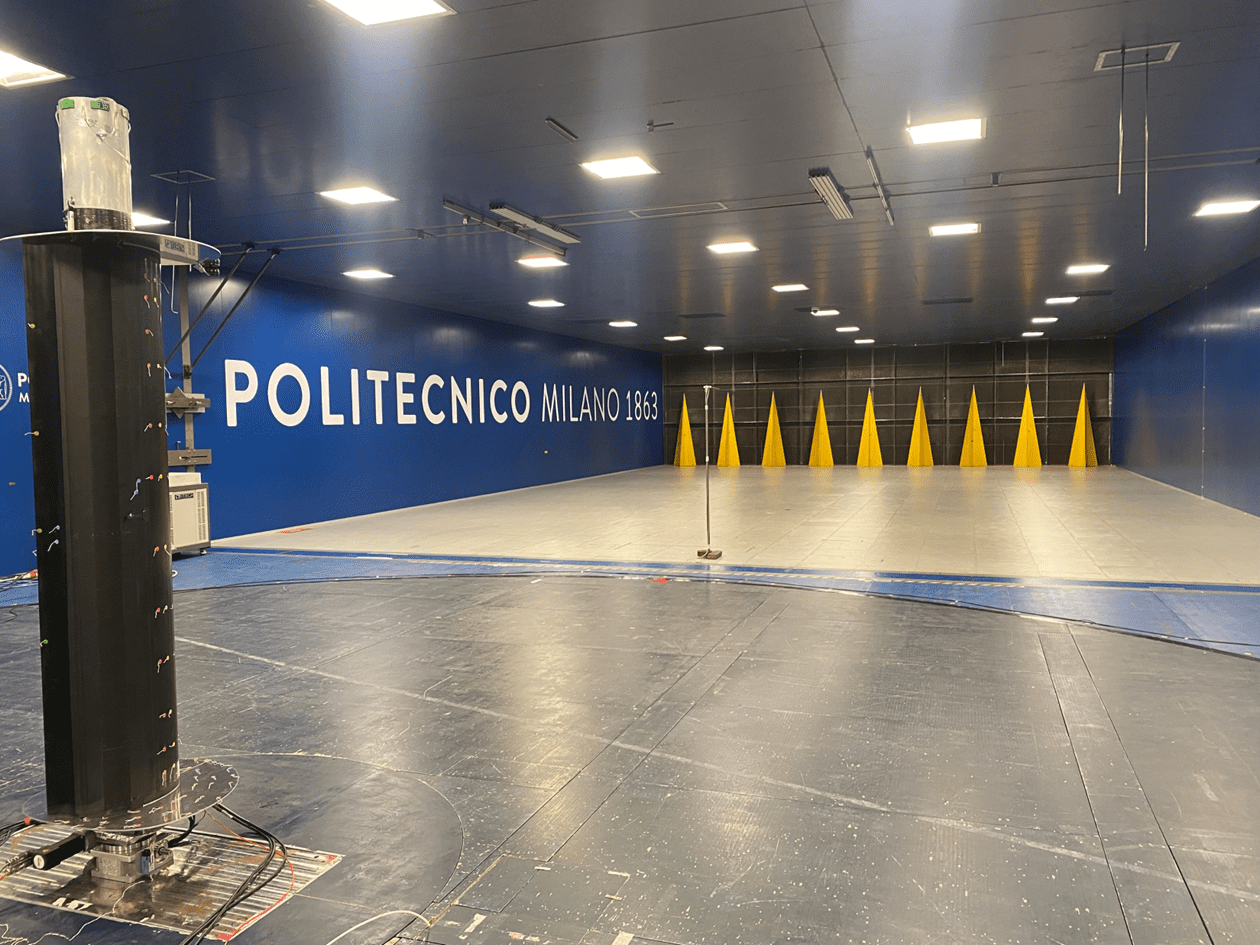
The first of these is the most complete in terms of physical representation — but it comes with significant constraints: model complexity, extended wind tunnel occupation, and high costs. For a single installation, a two-week test campaign might be feasible. For 26 installations, it would mean over a year of wind tunnel usage! A clear limitation in both time and budget.
Full-scale testing (option 3) provides the most realistic case but introduces challenges of its own: no control over wind conditions and sea state, high cost due to vessel time and an uncertain completion timeline, as ideal conditions must align across many test points.
Our approach: From wind tunnel to real-world modelling
To overcome these limitations while staying aligned with IMO guidance, we’ve adopted a hybrid methodology that combines the strengths of Options 1 and 2:
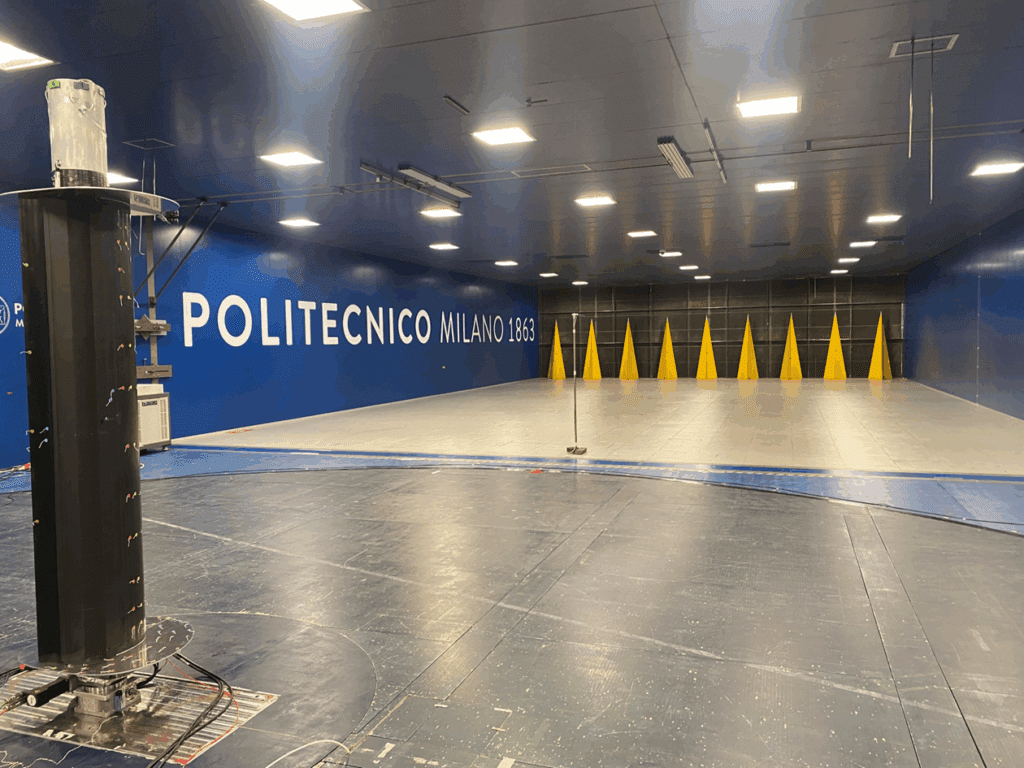
- Wind tunnel testing of a single eSAIL®.
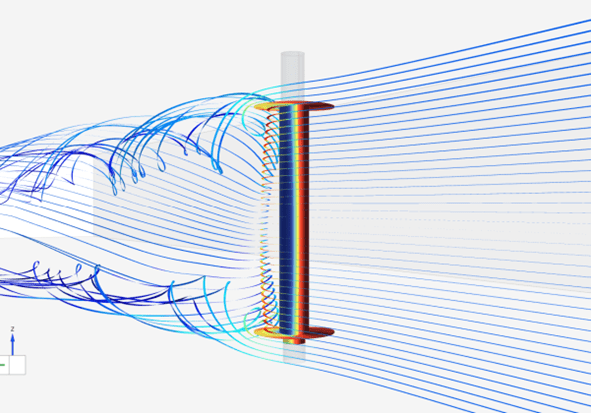
- Validation of CFD simulations using the same setup, ensuring accurate force predictions.
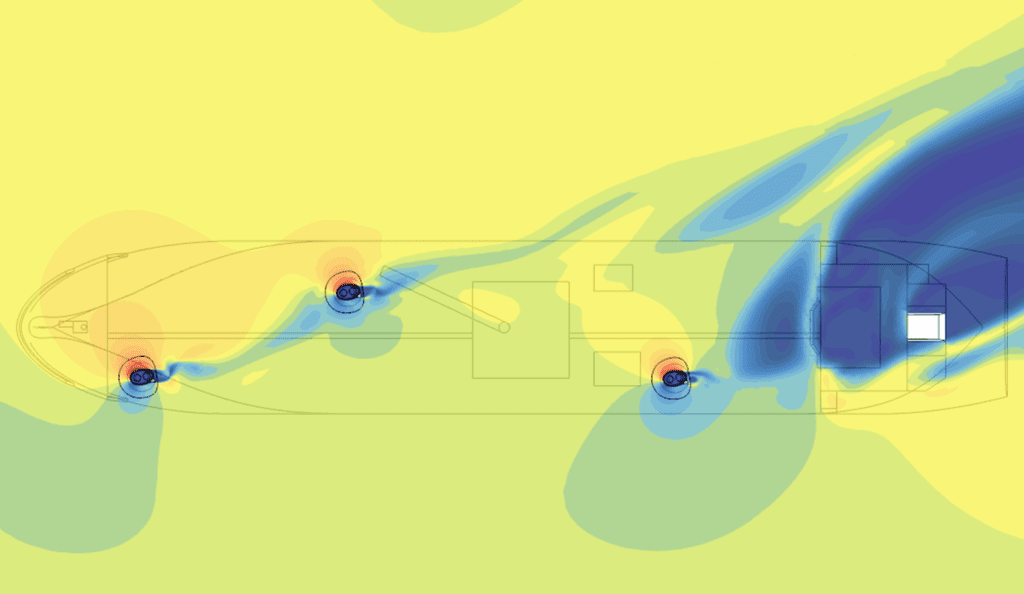
- Multi-sail simulations, including sail-to-sail and sail-to-hull interferences, using both CFD and our in-house tool POINT (POtential INterference Tool).
POINT (more details in this post) allows us to perform thousands of interference simulations daily on a laptop, calibrated both to wind tunnel and CFD results. This multi-fidelity approach allows us to generate a complete and reliable force matrix rapidly, at a fraction of the cost and time.
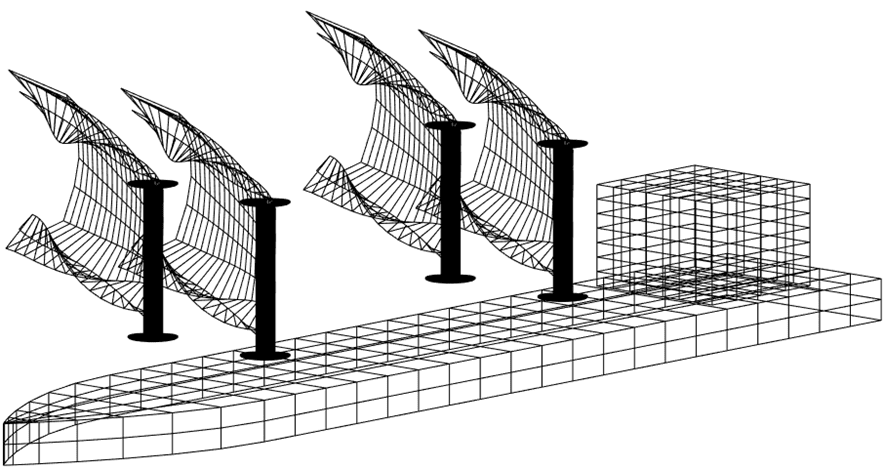
Importantly, achieving this scale with full CFD alone would typically require access to large, expensive high-performance computing (HPC) resources. While we do use HPC, it is carefully scaled to our needs rather than relying on “unlimited” computational power.
The result is a performance model that is not only technically robust but also scalable, allowing us to support a wide range of ship configurations and optimize eSAIL® installations for real-world routes and operating profiles.
The result: Validated performance, scalable confidence
With the methodology now validated by both DNV and Lloyd’s Register, we’re in a stronger position to support owners, charterers, and shipyards in the adoption of eSAIL® technology – with credible, regulation-aligned performance assessments ready for integration into EEXI Technical Files or fuel efficiency planning.
This achievement brings us one step closer to mainstreaming wind propulsion – with science, data, and class approval all working in harmony.
Want to go deeper?
If you’re into the technical side of things, we’ve published three in-depth papers that delve into the methodology behind these validations:
- “Aerodynamic optimization of the eSAIL” (RINA Wind Propulsion Conference 2023) – focuses on our wind tunnel and CFD validation workflow.
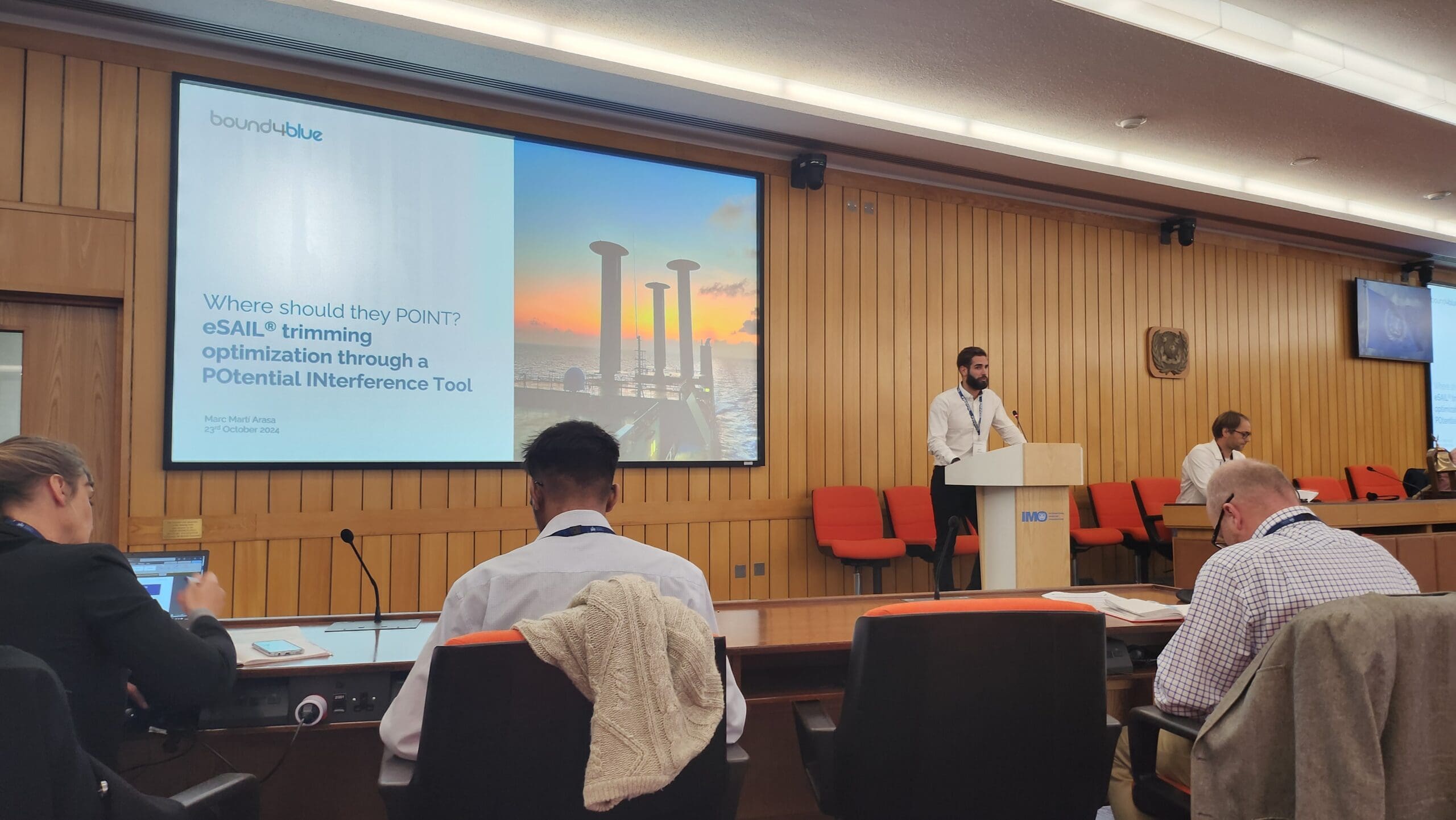
- “Where should they POINT?” (RINA Wind Propulsion 2024) – explains how POINT helps us trim and optimize multi-sail performance, accounting for aerodynamic interactions.
- “From single to multiple experimental insights into eSAIL performance and aerodynamic interference” (RINA Wind Propulsion Conference 2026) – details how a single sail and dual-sail experimental campaign is used to calibrate and validate our CFD and POINT tools, ensuring accurate, reliable performance predictions for real-world deployment.These studies form the scientific backbone of the methodology that has now been validated.
With a validated Pwind methodology, shipowners can adopt wind propulsion with greater confidence and reduced risk. To find out more about how you can take advantage of our validated methodology and market proven suction sail systems please do get in touch (sales@bound4blue.com).
FAQ: Pwind, third party validation and optimal installations
Q: What is Pwind?
Pwind is the effective propulsive power delivered by a wind-assisted propulsion system. It’s calculated under IMO MEPC.1/Circ.896 and represents how much engine power can be replaced by wind energy when assessing EEXI/EEDI performance.
Q: Why is it important for shipowners?
Because Pwind directly supports regulatory compliance and cost savings. It can be deducted from required engine power for EEXI/EEDI calculations, and it also feeds into FuelEU Maritime reward factors – helping lower GHG intensity and reduce compliance costs.
Q: Why is third-party validation of Pwind methodology important for shipowners?
It provides confidence that performance claims are credible, transparent, and aligned with IMO guidance. For shipowners, this means Pwind values can be trusted for regulatory submissions, technical files, and fuel efficiency planning – reducing risk while accelerating adoption of wind propulsion.
Q: Why is it important that the validation is transferable?
While each Force Matrix is installation-specific, the validated methodology itself can now be reused across projects. This means new eSAIL® installations can determine Pwind faster and more efficiently using the same approved process – creating a repeatable pathway to compliance and commercial benefit across different vessels.
Q: Why is it important to address aerodynamic interference when adopting WAPS technology?
Because multiple sails don’t simply add their forces together. Sail-to-sail and sail-to-ship interactions significantly affect real world performance. Accounting for these interference effects, and addressing them whenever possible, is essential when planning installations.