News
From policy to practice: How wind can help shipping voyage from ambition to action

Cristina Aleixendri
Published
24 September 2026
Every September, IMO World Maritime Day puts shipping centre stage, focusing attention on the challenges and opportunities defining our industry. This year the theme is ‘From Policy to Practice: Powering Maritime Excellence’. For those of us working on shipping’s energy transition, this raises a particularly pressing question: how do we convert decarbonisation ambition into investment and action onboard vessels?
Despite the barrage of almost daily disruptions impacting upon shipping, we’re all aware of the direction our industry must voyage in. The issue is how to get there.
This year’s IMO World Maritime Day puts that challenge front of mind, charging us all with envisaging a way to transition ‘from policy to practice’.
In decarbonisation terms, that means moving beyond high-level strategies and distant targets and identifying practical solutions that can be implemented onboard vessels today. Solutions that deliver measurable improvements now, while supporting the long-term shift to lower-carbon shipping tomorrow.
To be blunt, you never get anywhere unless you start moving. So, what steps can we already take for our vessels, fleets and companies?
Solving the puzzle
The industry’s decarbonisation toolbox is steadily expanding. Digital optimisation, weather routing, hull and propeller improvements, wind propulsion, performance monitoring, alternative fuels and operational efficiencies all have important roles to play.
What’s more, they have important roles to play together.
Increasingly, during our meetings with forward-thinking shipowners, they don’t talk about one solution in competition with another. They discuss how to weave a number of solutions together to create a flexible, pragmatic approach where each piece of the puzzle builds towards an optimised big picture. And that picture has to be greener environmentally, but also commercially.
The value of wind
All solutions should ideally deliver some degree of measurable return on investment – reducing energy costs in tandem with emissions, while lowering regulatory exposure. These are not separate objectives anymore. For adoption to truly scale, environmental performance and commercial performance must reinforce one another – with solid incentives in both arenas. And it’s here where wind announces itself as a major step in the right direction.
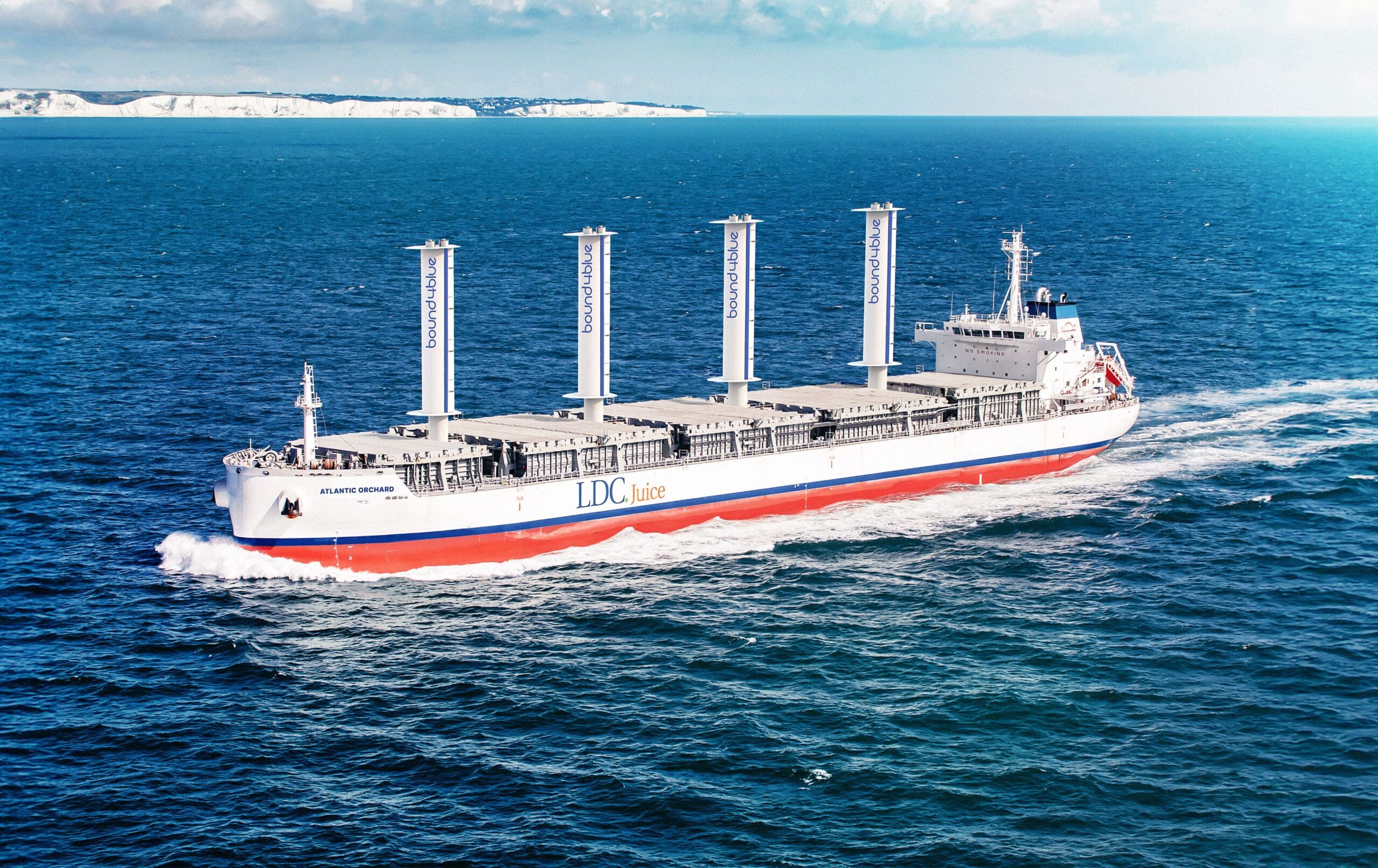
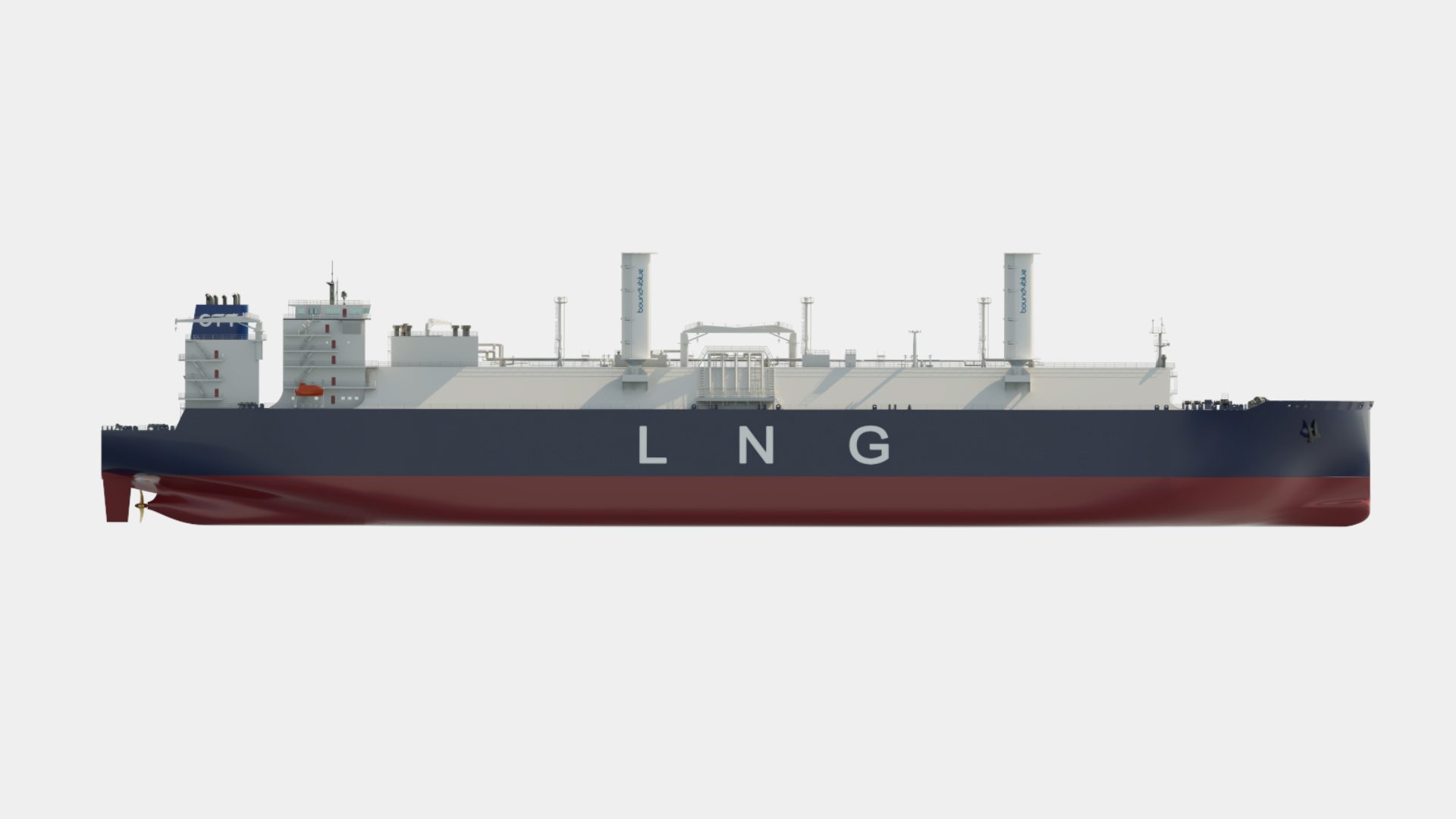
Wind, as you may have noticed from recent headlines, is moving into the mainstream. From being a small blip on the periphery of maritime discussions, it is now on everyone’s radar, with a wave of commercial installations across vessel segments, including tankers, bulk carriers, Ro-Ro vessels, general cargo ships and combination carriers. As such, talk of potential has evolved into talk of real-world results. What we are seeing is decarbonisation in practice.
Taking bound4blue’s eSAIL® suction sails as an example, we now have eSAILs® operating on 13 vessels (with a total of 50 units installed or on order) producing measurable real-world results, day in, day out. Operators are reporting double-digit fuel savings in favourable operating conditions, consistently benefitting from daily reductions equivalent to several tonnes of fuel and many more tonnes of CO₂ emissions. These results offer the kind of clear win-win that, again, is so key to supercharging change.

Assured choice
Operational confidence is one factor required to translate ambition into action, but owners also need a more far-reaching peace of mind when it comes to selecting the best solutions for their individual assets. They want a sense of assurance that technologies integrate smoothly into existing operations, satisfy regulatory requirements and continue delivering value throughout a vessel’s operational life. In an uncertain world they, understandably, want a degree of certainty.
This is why it’s so crucial for the companies developing ‘green technology’ to invest in independent validation and third-party Class assessments to ensure their systems are adopted. Again, using bound4blue as an example, we’ve received a raft of validations, reviews and certifications from leading class societies such as DNV, Bureau Veritas, Lloyd’s Register and ABS. We believe that’s key when it comes to creating the confidence needed for the industry to put change into practice.
Setting course
One noteworthy implication of the IMO’s theme for the day is that it also shines the spotlight on the nature of policy itself. Or rather, the difficulties inherent in achieving international accord when it comes to policy steps forward, such as the Net-Zero Framework. However, although the timing and final design of such key policies remain uncertain, shipowners do not need to postpone decisions until the regulatory picture is complete. As stated at the beginning of this piece, we know where we’re going, all of us – we do not have to wait.
There are many technologies available today capable of delivering significant efficiency improvements. The opportunity lies in deploying them strategically, combining complementary solutions that reduce overall energy demand, while all the time readying our fleets for whatever future fuel mix ultimately emerges. Wind propulsion fits naturally within this philosophy. When we think about moving from policy to practice, there’s a danger of turning back to focus on policy issues, when what we really need is to keep our vision firmly on the future. Practice means taking action. And now is the time to do so. Wind is ready and waiting to move our industry forwards.